
A Brent price around $100 a barrel changes the conversation around offshore development, but not in the way the headline might suggest.
The question is not whether every marginal field suddenly becomes commercial. It is whether projects that previously sat below an operator’s investment threshold become worth examining again.
That distinction matters because offshore developments are long-cycle investments. A field can contain recoverable oil and still remain undeveloped because the expected value of production does not justify the cost of drilling, subsea infrastructure, processing and export. When the price of that production changes, the economics of the decision can change with it.
Brent has recently moved above $100 per barrel amid severe disruption and uncertainty around regional oil supply. But that is precisely what makes the current environment more complicated. A price spike caused by a supply shock can improve near-term revenue expectations without necessarily providing the long-term certainty required to sanction a project that may take years to develop.
So the more useful question is not whether $100 oil makes marginal offshore fields viable.
It is which projects become worth reconsidering.
What Moves Up the Investment List?
Operators do not evaluate offshore fields simply by asking how much oil they contain. Potential developments compete with one another for capital, and their ranking depends on expected production, development cost, timing, risk and the infrastructure required to bring the barrels to market.
That matters particularly for smaller discoveries.
A field does not need to become a major discovery to become more interesting. It needs the expected value of its production to improve enough relative to its development cost for the project to clear the operator’s investment hurdle.
A higher oil price can help do that. It increases the potential revenue generated by each barrel and can create more room between expected project income and development expenditure. Projects that previously looked too small, too expensive or too slow to compete for capital may therefore deserve another look.
That could include smaller discoveries, satellite developments and fields that were technically feasible but commercially marginal under a lower price assumption.
The important distinction is between becoming economic and becoming interesting enough to reassess. The latter can happen well before an operator is ready to approve a final investment decision.
Infrastructure Can Change the Calculation
The price of the oil is only one side of the equation. What it costs to reach that oil can be just as important.
A small offshore discovery that requires an entirely new production system can remain difficult to justify even in a stronger price environment. The operator may need new processing facilities, export infrastructure and extensive subsea and marine systems before production can begin.
A nearby discovery with access to an existing production system presents a different proposition.
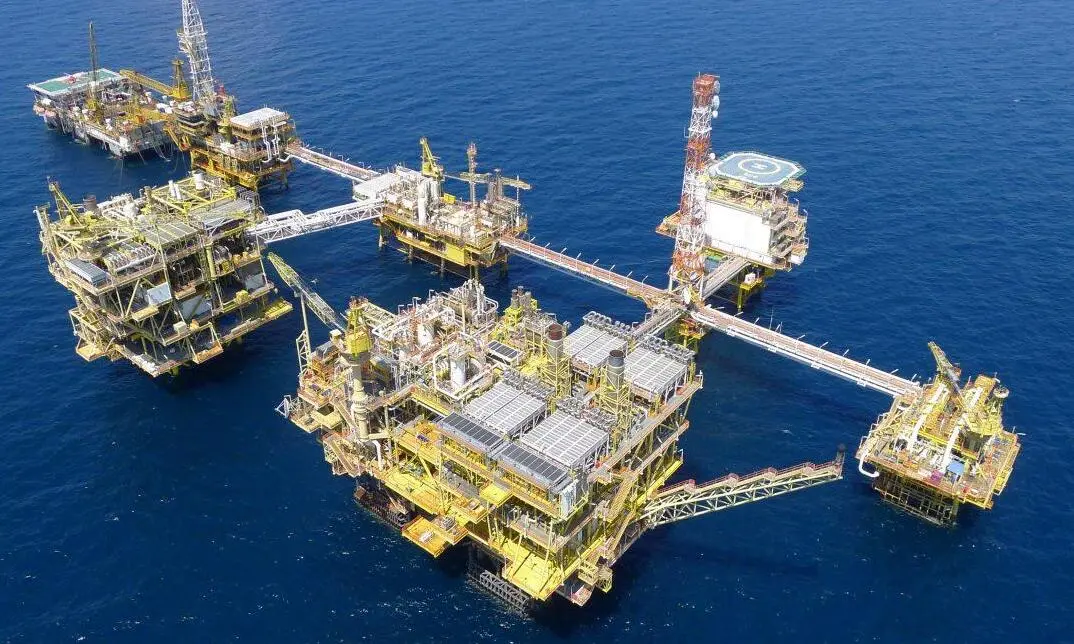
Where spare capacity exists, a subsea tieback can allow a new field to use an established host facility rather than requiring an entirely new production system. Existing offshore infrastructure has long been used as a hub for new discoveries and subsea tiebacks, particularly as mature assets move through their producing lives and available capacity emerges.
That does not make the infrastructure costless. Capacity has a value, modifications may be required, tariffs may apply and the condition of ageing equipment has to be assessed. But the capital requirement can still be materially different from developing a standalone offshore project.
This is where the current price environment becomes more interesting. Higher oil prices can improve the revenue side of the equation, while existing infrastructure can reduce the capital required to reach production.
The combination can move a field across an investment threshold that neither factor could necessarily achieve on its own.
The Problem With Building Around a Price Spike
There is, however, a fundamental reason not to treat $100 oil as a simple green light for marginal offshore development.
An operator making an investment decision today is not really investing at today’s oil price. Offshore projects can take years to move from appraisal and concept selection through development and first production, after which the field may produce for many more years.
The relevant question is therefore whether the project remains resilient across a range of oil prices, not whether it generates an attractive return at the current peak.
That matters even more when the price increase is being driven by disruption. Today’s elevated price may contain a substantial risk premium that could disappear if supply conditions normalise. Brent’s recent move above $100 has been strongly influenced by conflict and disruptions around major oil-shipping routes, making it difficult to treat the current price as a straightforward signal of long-term market fundamentals.
A field that only works at $100 may therefore remain too risky if its economics deteriorate sharply when prices fall materially below that level. A field that works across a broader range of prices, but becomes significantly more attractive at $100, presents a much stronger proposition.
That distinction is likely to matter as operators revisit their project portfolios.
What Comes Back Into the Conversation?
The most interesting consequence of higher oil prices may therefore be less about a new offshore investment boom and more about what happens at the margins of existing portfolios.
Projects that were previously screened out may return for economic review. Smaller discoveries near producing assets may receive renewed attention. Operators may look more closely at tieback opportunities, spare processing capacity and development concepts designed to reduce upfront capital.
This is where the economic decision begins to translate into an execution opportunity.
If a marginal offshore field moves from economic review toward development, the requirements do not stop at the investment decision. Drilling, subsea installation, equipment mobilisation, vessels, marine operations, procurement and specialist manpower are all needed to turn the development concept into producing infrastructure.
This is where Sealandair Group’s capabilities become relevant. Through its energy and integrated solutions businesses, the company bridges the gap between economic approval and physical reality by deploying:
- Marine & Vessel Solutions: Mobilizing the specific offshore assets required for subsea installation.
- Procurement & Equipment Supply: Managing strict supply chains to avoid brownfield project delays.
- Specialist Manpower: Providing the technical personnel needed to work within highly complex, active production environments.
The opportunity is therefore not created by the oil price itself. It is created by what happens after an operator decides that a previously marginal project is worth pursuing again.
But that decision remains fundamentally economic. A higher oil price can reopen a project that once looked marginal, but it cannot remove the underlying risks of offshore development. Infrastructure condition, available capacity, development cost, fiscal terms, production profile and long-term price assumptions still determine whether the project ultimately moves forward.
That is why $100 oil should be viewed less as a trigger for automatic development and more as a change in the screening environment.
Many of the marginal barrels are already known to the industry.
What changes is how many of them are worth looking at again.
The question is not whether $100 oil makes marginal fields economic. It is which marginal fields become difficult to ignore.