
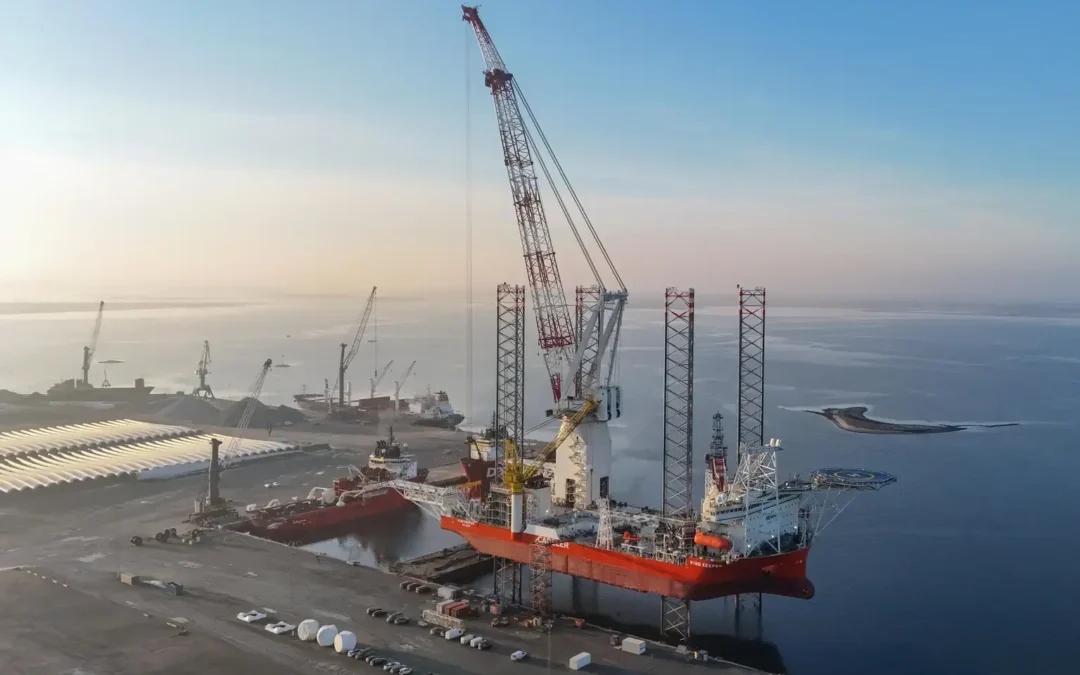
An offshore project can have its vessel contracted, equipment procured and personnel identified, yet still not be ready to mobilise.
The reason is that mobilisation depends on several parts of the operation becoming ready at the same time.
Equipment has to be available and prepared for deployment. The vessel has to be available and suitable for the planned activity. Personnel need to be available and properly qualified. Cargo has to reach the shore base, permits and approvals need to be in place, and the conditions offshore have to allow the campaign to begin.
A project may be close to ready without being ready to move.
Mobilisation is therefore not a single milestone. It is a point where multiple dependencies have to align.
Readiness Has Several Moving Parts
The first consideration is the marine operation.
The vessel must be available for the required period and suitable for the planned activity, with the appropriate capabilities, certifications and crew in place. Its mobilisation port and berth arrangements also need to be established, while fuel, water, provisions and other operational requirements have to be available.
At the same time, the equipment required for the campaign must be ready to move. That means more than confirming that the equipment has been purchased or leased. Critical equipment may need inspection, testing, certification, configuration or preparation before it can be loaded.
Cargo also has to be in the right place at the right time.
A component sitting at a supplier’s facility does not help an offshore campaign that is scheduled to mobilise tomorrow. Equipment may need to move through several stages before reaching the vessel, including transportation to a shore base, inspection, staging and loading.
The same applies to personnel. The right people need to be available when the campaign begins, with the necessary qualifications, medical clearances, training and offshore experience. A project can have a complete personnel plan on paper and still face a mobilisation problem if a critical specialist becomes unavailable at the wrong time.
These requirements are connected.
A vessel cannot sail with critical cargo missing. Cargo cannot necessarily be loaded before the required documentation or lifting arrangements are confirmed. Personnel may not be able to board until the appropriate approvals are in place.
Readiness is therefore less about having individual resources and more about having the resources aligned.
The Mobilisation Gate
This is where the mobilisation decision becomes important.
Before an offshore campaign moves, project teams need to establish whether the critical conditions for departure and execution have actually been met.
That can include permits and approvals, current drawings and procedures, equipment certification, cargo documentation, vessel readiness, personnel availability and shore-base arrangements. The expected weather and marine conditions also matter, particularly where the work depends on a defined operating window.
A project may be 95% prepared and still be unable to mobilise if the remaining 5% contains something critical.
A missing specialist component can hold up an entire loadout. A delayed permit can prevent departure. An unavailable crew member can affect the planned manning arrangement. Poor weather can make an otherwise complete campaign unsafe to begin.
This is why mobilisation readiness should not be measured simply by how much preparation has been completed.
The more useful question is whether anything critical can still prevent the campaign from moving.
That distinction can change how project teams plan their final preparation period. Instead of treating every outstanding item equally, they can identify which dependencies are genuinely capable of stopping mobilisation and focus attention on resolving them before the mobilisation date arrives.
Preparation Also Needs a Contingency
A mobilisation plan cannot depend entirely on everything happening exactly as expected.
Weather can change. Cargo can arrive late. A vessel can become unavailable. Equipment can fail inspection. Personnel can become unavailable. An approval can take longer than expected.
The existence of a contingency does not mean that disruption will be avoided. It means the project has considered what happens if an important condition changes.
That might involve alternative equipment, another vessel option, revised loading arrangements, replacement personnel, additional shore-base capacity or a different mobilisation window.
The appropriate contingency depends on the campaign, but the principle is consistent: the project should know which conditions are critical to mobilisation and what it will do if one of them changes.
This becomes particularly important when several resources have been arranged around the same mobilisation date. A delay in one area can create consequences elsewhere. Extending a vessel charter, rescheduling personnel, storing cargo or moving an offshore work window can all introduce additional cost and complexity.
Good mobilisation planning therefore looks beyond the preferred scenario.
It asks not only whether the project can mobilise as planned, but how quickly it can respond if the original plan no longer holds.
From Preparation to Execution
Mobilisation is the point at which planning begins to become physical activity.
Equipment leaves the shore base. Personnel move offshore. Vessels sail. Cargo is loaded and transported. The project begins operating within the conditions of the actual worksite rather than the assumptions of the planning office.
That transition leaves less room for unresolved dependencies.
A project that reaches mobilisation with critical items still uncertain may carry those uncertainties offshore, where resolving them can be slower, more expensive and more complicated. A project that closes its critical gaps before mobilisation has a better chance of beginning the campaign as planned.
For operators and contractors, this makes the mobilisation gate more than an administrative checkpoint. It is a practical test of whether the project has converted its plans, resources and approvals into an executable operation.
Sealandair Group supports this stage of project execution through procurement, vessel leasing and marine support, helping operators and contractors align the resources required for mobilisation with the timing of the campaign. When equipment, vessels, people and shore support have to come together within a defined window, the challenge is not simply securing the resources, but having them ready when the project is ready to move.
An offshore project is not ready to mobilise simply because most of its resources are in place.
It is ready when the critical equipment, vessel, people, documentation, approvals, shore support and operating conditions are aligned, with a credible response available if one of those conditions changes.
Mobilisation is the point where preparation becomes execution. The quality of that transition can determine how smoothly the campaign begins.