
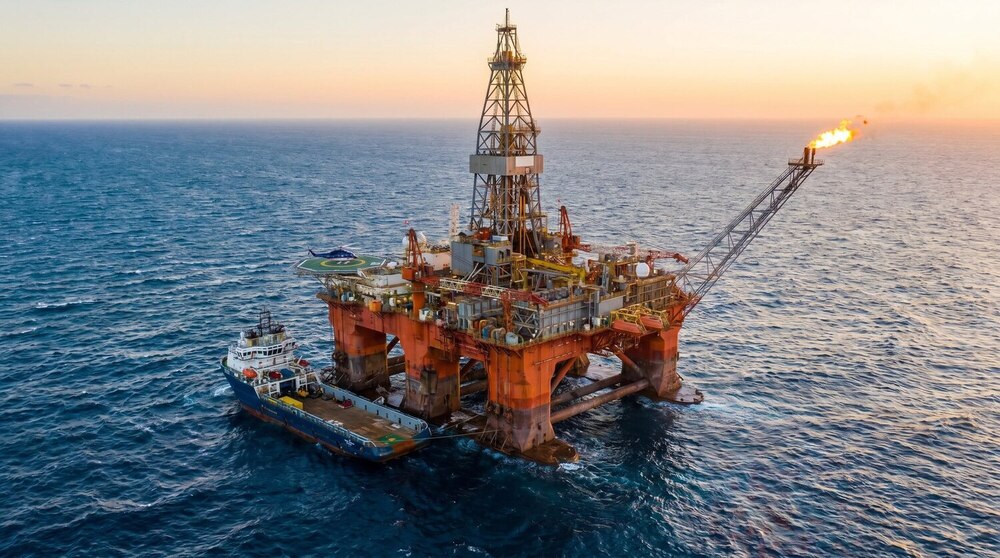
Africa is rapidly emerging as the global centre of deepwater oil and gas development, with West Africa at the heart of this shift. As onshore basins mature and global energy demand remains strong, operators are increasingly moving capital offshore in search of larger reserves and long-term production potential.
This evolution is not only reshaping upstream investment it is also changing how offshore energy projects are delivered, where companies like Sealandair Group are becoming increasingly relevant across the value chain.
Africa is expected to account for around 40% of global high-impact exploration wells in 2026, driven by ultra-deepwater Atlantic margin activity, reinforcing the region’s position as a key offshore growth hub.
Deepwater Expansion and the Operational Reality
Deepwater has become central to global upstream strategy because it offers scale, reserve depth, and long-cycle production stability that onshore assets can no longer consistently deliver.
This shift is reflected in several structural drivers:
- Declining output from mature onshore basins
- Larger and more technically complex offshore reserves
- Advances in subsea engineering and drilling capability
- Long-life assets supporting global supply stability
However, these advantages come with increased operational complexity, requiring highly coordinated procurement, logistics, and execution systems areas where companies such as Sealandair Group are increasingly engaged.
Closing the Execution Gap in Deepwater Development
While exploration success across Africa is improving, the most persistent challenge remains the transition from discovery to production.
This gap is shaped by:
- Dependence on specialised offshore vessels and marine logistics
- Complex subsea installation and engineering requirements
- Fragmented supply chains involving multiple global contractors
- Delays in sourcing and delivering critical equipment
- Long development timelines between discovery and first oil or gas
In practice, these constraints mean that successful discoveries can still face significant delays before becoming productive assets. Coordinating this phase requires tightly aligned systems across procurement, logistics, and offshore execution.
Within this environment, Sealandair Group operates across interconnected parts of the offshore delivery chain to help reduce fragmentation and improve execution continuity.
Conclusion
Africa’s deepwater expansion is reshaping global upstream energy strategy, with West Africa firmly positioned as a leading offshore frontier. While investment, exploration success, and large-scale projects continue to accelerate, execution remains the defining challenge. As offshore developments grow in scale and complexity, the ability to align procurement, logistics, and operational delivery is becoming essential to project success.
In this evolving landscape, Sealandair Group is part of the ecosystem supporting that transition helping strengthen the systems that move offshore projects from discovery to production in an increasingly complex environment.