
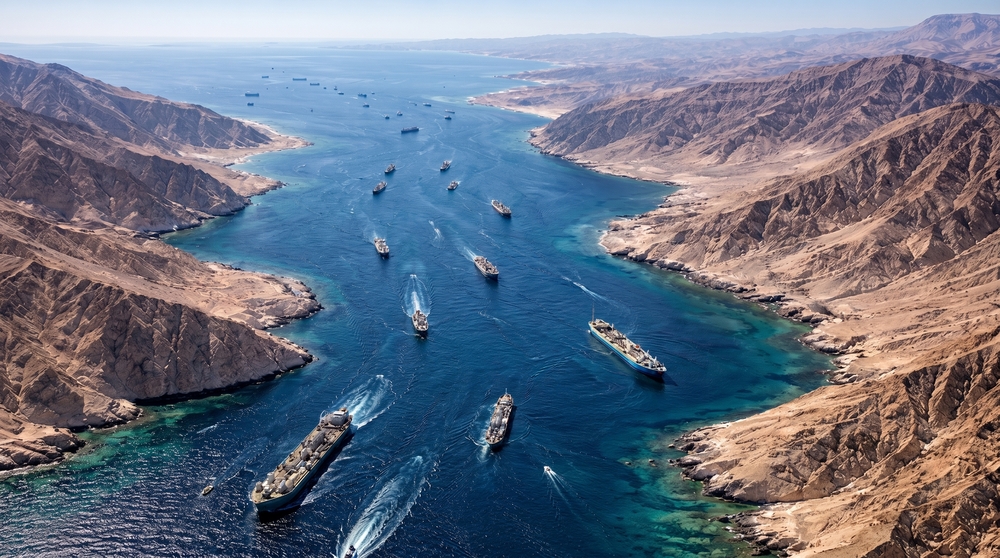
When the world’s most critical oil chokepoint closes, every barrel outside the Middle East becomes more valuable and Africa’s producers are taking notice.
The Strait of Hormuz disruption has once again highlighted how fragile global oil supply routes can be. With a major shock to one of the world’s most important energy corridors, markets have reacted sharply, and global attention is shifting toward alternative production regions.
Global oil disruption is reshaping investment flows
The crisis triggered a significant supply shock, with global oil output reportedly falling by around 10.1 million barrels per day following disruption linked to tensions in the Iran–Israel conflict. In response, crude prices surged from the low $70s to nearly $120 per barrel before easing back into the low-to-mid $90s range.
This volatility reflects a clear pattern in global energy markets: when Middle Eastern supply routes become uncertain, capital and demand quickly shift toward more stable production regions.
Industry forecasts are already adjusting. Baker Hughes’ CEO has projected a rebound in upstream investment beginning in H2 2026 and continuing into 2027, as oil majors reposition toward diversified supply sources.
West Africa’s renewed strategic relevance
In this environment, West Africa is once again gaining attention as a critical alternative supply hub.
Nigeria is particularly well positioned, with established upstream infrastructure, deepwater reserves, and long-standing export capacity. As global buyers and producers reassess geopolitical risk exposure, the region is benefiting from renewed interest in non-Middle Eastern supply options.
This shift is driven less by discovery and more by strategy energy security now depends on diversification, not concentration.
The role of execution in the next investment cycle
As upstream investment returns, the key constraint is no longer funding but delivery speed. Rapid field development, procurement efficiency, and project execution have become central to meeting rising demand.
Energy services companies are therefore becoming more critical in enabling production scale-up across emerging investment zones.
Within this context, Sealandair Energy operates within the procurement and project delivery space, supporting upstream operators as they respond to shifting global supply conditions. As international oil companies diversify away from high-risk chokepoints, execution-focused partners become essential to accelerating new production.
Conclusion
The Strait of Hormuz crisis is reshaping global oil dynamics by reinforcing one key reality: supply concentration creates systemic risk.
As a result, attention is shifting toward alternative production regions like West Africa, where stability and scalability are becoming strategic advantages. For countries such as Nigeria, this represents a renewed opportunity to attract upstream investment and expand production capacity.
In this evolving landscape, energy services providers such as Sealandair Energy play a supporting role in enabling faster, more efficient project execution as global oil markets adjust to a more fragmented and uncertain supply environment.