
An offshore discovery does not normally translate into production quickly. Between finding hydrocarbons and producing them commercially sits a long chain of appraisal, engineering, development planning, approvals, procurement, construction, subsea installation and commissioning. For many discoveries, that process can take years.
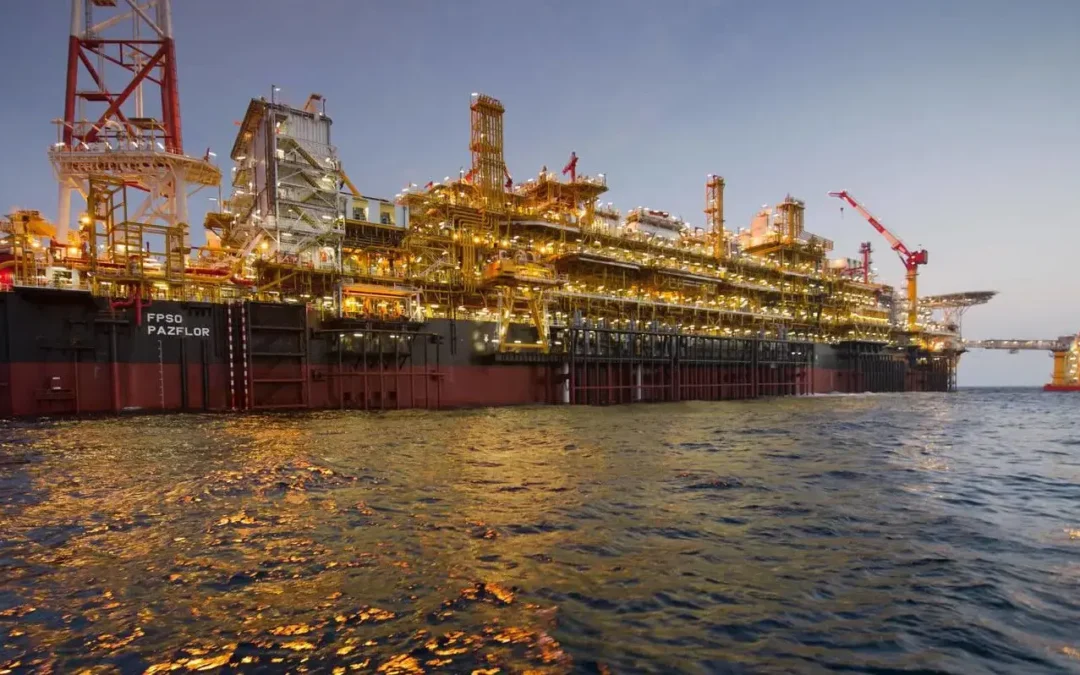
So when TotalEnergies says its Acacia-5 discovery offshore Angola could reach first oil around three months after the June 2026 discovery. The discovery is expected to add around 6,000 barrels per day to Block 17 production, with the development leveraging available capacity on the Pazflor FPSO. The interesting question is not simply how quickly the operator can develop a field. It is what was already in place before the discovery was made.
That changes the development equation significantly.
The Infrastructure Advantage
A conventional standalone offshore development can require a new production system, processing facilities, export infrastructure, subsea architecture and extensive marine support. Each component adds engineering work, procurement requirements, installation activity, commissioning and interfaces that have to be managed before production can begin.
A discovery that can make use of an existing production system presents a different proposition. If the host facility has sufficient available capacity and remaining operating life, the new field may be developed as a subsea tieback rather than requiring an entirely new production system.
That can avoid some of the largest and longest components of a standalone development, shortening the path between discovery and first production. The operator still has to drill wells, install subsea equipment, establish the connection to the host facility and bring the new production online. But it does not have to build everything that would have been required for a standalone field.
This is the important distinction. The fastest development is not always the one that builds fastest. It can be the one that has the least new infrastructure to build.
Existing infrastructure, however, is only valuable when it has capacity that can actually be used.
Capacity Matters
An FPSO may already have processing, storage and export systems in place, but if those systems are operating close to their limits, a new discovery could still require significant modifications or additional infrastructure. Remaining asset life matters as well. A host facility must be capable of operating long enough to support the additional production, while its condition, processing constraints, subsea architecture and maintenance requirements must also be considered.
This is why mature offshore infrastructure can become strategically important even as original fields decline. As production falls, capacity can potentially become available. If the facility still has sufficient operating life, that capacity can create room for nearby discoveries to be developed without building an entirely new production system.
An ageing production asset can therefore acquire another source of value. It may no longer be valuable only because of what remains in its original reservoir, but also because it can provide a platform for additional production nearby.
The development concept ultimately determines how much of that advantage can be captured. A discovery that can be connected through a relatively straightforward subsea tieback is fundamentally different from one that requires a new FPSO, export system and supporting infrastructure. The difference is not simply capital expenditure. It is development scope.
A standalone project typically involves more engineering packages, equipment requirements, construction activity and interfaces between contractors and systems. A tieback can reduce that scope by making the existing host facility part of the development from the beginning. Subsea wells, flowlines, controls and connections still have to be designed, supplied, installed and commissioned, and existing facilities may require modifications, but the number of new systems that must be created can be significantly smaller.
That changes both the cost and the schedule. It also changes how operators can evaluate smaller discoveries: not only by asking how much oil they contain, but by asking how easily that production can be connected to infrastructure that is already operating.
Speed Creates Its Own Execution Challenge
A shorter development timeline does not mean less execution work. In some respects, it can create greater pressure on execution because delays in procurement, equipment availability, vessel mobilisation or specialist manpower can have a much larger effect when the overall schedule is compressed.
The advantage created by existing infrastructure can therefore be lost if the supporting execution system cannot move at the same pace. Drilling, subsea installation, equipment mobilisation, marine operations, procurement and specialist manpower still have to come together in the right sequence and within a tighter window.
This is where Sealandair Group’s capabilities become relevant. Through its energy and integrated solutions businesses, the company supports project requirements across procurement, project management, technical support, equipment and vessel solutions, operational support and manpower deployment. The relevance is not simply that fast-track developments require these services. It is that compressed schedules leave less room for execution delays, making the timing and reliability of supporting activities increasingly important.
Acacia-5 is therefore interesting for more than its three-month first-oil target. It illustrates a broader development model in which new discoveries can be evaluated alongside the infrastructure surrounding them. A discovery with no nearby infrastructure may require a completely new development, while a smaller discovery near an existing facility with available capacity and sufficient remaining life can face a very different commercial and execution equation.
That does not mean every nearby discovery will become a fast-track project. Capacity may be limited, infrastructure may require costly modifications, asset life may be insufficient, or the reservoir may not justify the investment. But where those conditions align, the development clock can change dramatically.
Offshore development speed is not determined only by how quickly an operator can build. It is also determined by how much the operator does not have to build.