
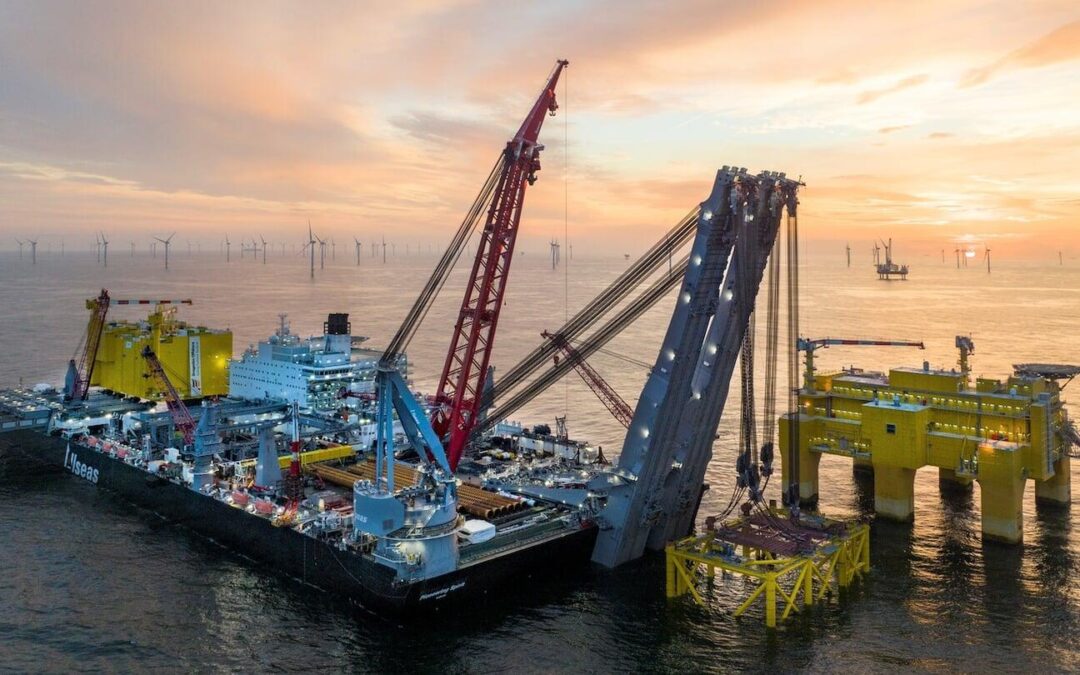
Offshore operations bring together engineering, procurement, logistics, marine operations, construction, installation and commissioning. Each discipline has its own expertise and responsibilities, but the success of the operation depends on how those responsibilities connect.
The complexity of the operation does not necessarily sit within any one discipline.
It often exists between them.
A vessel can be ready while critical equipment is still being prepared. Equipment can be available while the transport or lifting arrangements are not. Engineering can release a design while procurement is working against an earlier specification. None of these situations necessarily represents a failure within a single discipline. The problem emerges because one activity depends on another being ready, accurate or completed at the right time.
Where One Discipline Becomes Another’s Constraint
Consider an offshore installation campaign. Engineering defines the equipment and technical requirements. Procurement sources the equipment and works to a delivery schedule. Logistics moves it to the mobilisation point, while the marine team prepares a vessel with the required deck space, lifting capability and operational characteristics. The offshore team then depends on all of these elements being available in the right sequence.
A change in the dimensions or weight of a component, for example, may require procurement to source a different item. That can affect manufacturing and delivery dates, which can then affect cargo preparation and vessel mobilisation. If the equipment arrives after the vessel’s planned mobilisation window, the consequence may extend to the offshore installation schedule, personnel arrangements and other activities dependent on the same vessel.
What began as an engineering change can therefore become a marine or logistics problem several steps later.
The same principle works in reverse. A limitation identified during vessel planning may require a different installation method, which can lead to engineering changes or additional equipment requirements. The individual teams are still performing their specialist functions, but the requirements of one are changing the conditions under which another has to work.
This is why the performance of individual workstreams does not always tell the full story of operational readiness.
When Dependencies Become Operational Constraints
These relationships become particularly visible during mobilisation, when multiple activities have to align within a limited window.
An installation vessel may be available, the crew assembled and the offshore team ready, but a critical component could still be awaiting customs clearance or final inspection. If that equipment cannot be released in time, loading may be delayed and the vessel’s mobilisation window can begin to shift. A constraint that starts with cargo readiness can therefore affect the offshore schedule.
The same applies to information.
Offshore projects generate continuous changes to drawings, specifications, equipment requirements, vessel arrangements and installation procedures. A team can make a technically sound decision using information that was correct when it was issued but has since changed elsewhere in the project.
That creates a different type of dependency.
A supplier working from an earlier equipment specification may produce an item that no longer matches the latest requirement. A logistics team working from an outdated weight or dimension may arrange unsuitable transport. A marine team receiving a late change may find that its planned loading arrangement needs to be revised.
The issue is not simply communication. It is maintaining consistency between decisions being made across the project.
This becomes particularly important when several contractors and service providers are involved. Each may have its own responsibilities, schedules and systems, but the offshore operation ultimately has one mobilisation window and one sequence of work.
Good execution therefore requires more than tracking whether individual teams have completed their assigned tasks. It requires visibility of the dependencies between those tasks.
Managing the Connections
This does not mean that every discipline should become responsible for every other discipline’s work. Specialisation remains essential. Engineering needs technical depth, marine operations require specialist knowledge, and procurement and logistics each have distinct responsibilities.
The requirement is to understand where those responsibilities meet.
Critical dependencies can be identified before mobilisation. Equipment specifications can be checked against actual vessel and installation requirements. Delivery dates can be assessed against the point at which the equipment is genuinely needed, rather than simply when it is expected to arrive. Changes can be assessed for their potential effect on other workstreams before they become execution problems.
For energy and maritime projects, procurement, project management, technical support, equipment sourcing and marine requirements must be considered in relation to the wider operational plan. Sealandair Group provides support across these areas, where equipment readiness, delivery schedules and operational requirements can influence execution.
An engineering package may be complete, procurement may have placed the order and the vessel may be available. Yet none of these achievements guarantees that the operation is ready to proceed. Readiness depends on whether the required resources, information and activities align in the sequence the work demands.
That is the difference between individual readiness and operational readiness.
Offshore complexity is often found not within the disciplines themselves, but in the connections that make them work together.