
A gas field can be producing and still struggle to deliver its full value.
The reason is simple: getting gas out of a well is only the beginning. Before it can reach a power plant, industrial facility, domestic market or international buyer, the gas may need to be gathered, processed, compressed, transported, liquefied or stored. Each stage depends on equipment, capacity and operating systems that have to work together.
Depending on the reservoir and production conditions, the wellstream may contain water, condensates, natural gas liquids and other compounds. It may also require pressure management or treatment before entering a pipeline, processing facility or LNG plant.
The route that follows depends on the composition of the gas, the location of the development and the market it is intended to serve.
This means a resource can be technically capable of producing gas without necessarily having everything required to deliver that production commercially.
From the Well to Processing
A gas development may contain multiple wells spread across a field or offshore area. Gathering systems bring production together through flowlines, pipelines, manifolds and related equipment before it reaches a processing facility.
For offshore developments, subsea wells may connect to an offshore platform or floating production facility before the gas is transported towards shore. The gathering system has to account for factors such as water depth, pressure, flow conditions and expected production volumes.
Once the gas reaches processing facilities, its composition becomes critical.
Natural gas may contain water, condensates, natural gas liquids and other compounds. Some have commercial value, while others need to be removed because they can create operational, safety or transportation problems.
Processing separates and treats these components so that the gas meets the specification required for its destination. Water may need to be removed to reduce corrosion and hydrate risks, while carbon dioxide and hydrogen sulphide, where present, may need to be reduced to acceptable levels. Heavier hydrocarbons can be recovered as condensate or natural gas liquids and handled separately.
Processing is therefore not simply about removing unwanted components. It determines whether the gas is suitable for the system and market it is intended to enter.
Compression and Transportation
Once processed, the gas has to reach its destination.
Pipelines are the principal means of transporting natural gas across many domestic and regional markets. They can connect a production facility to a nearby processing plant, link offshore developments to shore or form part of a larger transmission network.
Because pressure falls as gas moves through a pipeline, compression facilities may be required to maintain the pressure needed for transportation. The route and operating requirements determine how these systems are configured.
The destination also affects the transportation model. Gas supplying a nearby power plant may require a direct connection, while gas serving a wider domestic market may enter a transmission network before reaching distribution systems.
The LNG Route
Gas destined for international markets may be processed further at an LNG facility, where it is cooled to approximately -162°C and converted into a liquid. This reduces its volume sufficiently for transport by specialised LNG carriers.
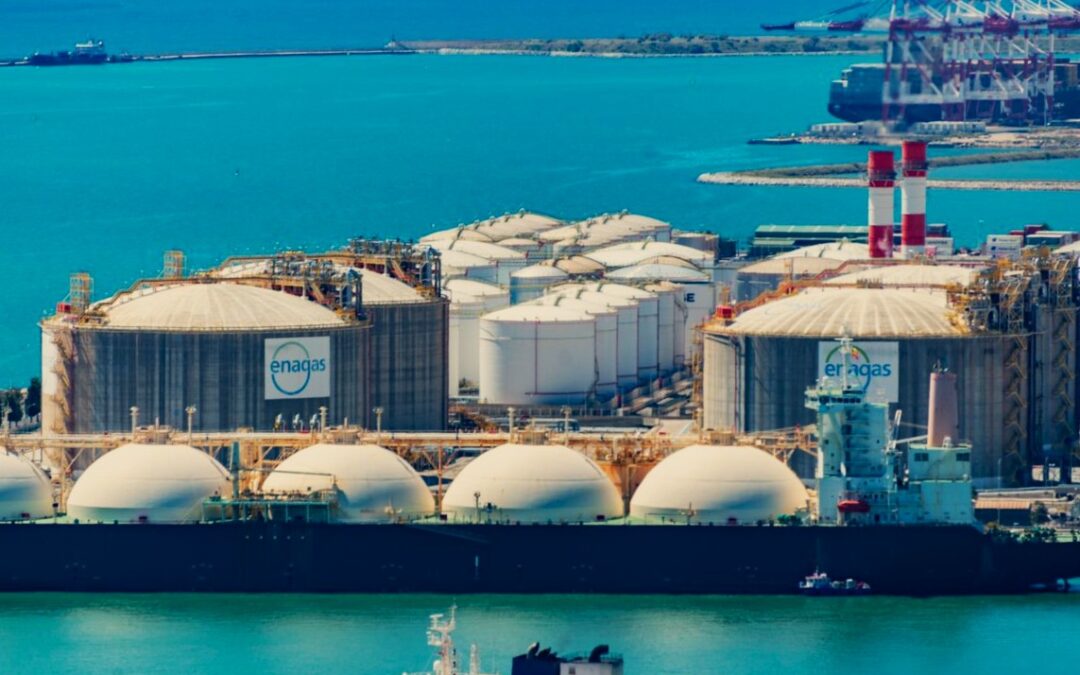
The LNG facility requires gas that meets the specifications for liquefaction, along with reliable utilities, liquefaction equipment, storage tanks and marine loading systems. After loading, LNG is transported to a receiving terminal, where it can be stored and converted back into gas through regasification before entering another pipeline network.
The LNG route therefore introduces additional stages and specialised infrastructure between production and final consumption.
For a gas development serving an LNG market, producing feed gas is only part of the requirement. The upstream supply also has to match the operating requirements of the liquefaction and export system.
Where Capacity Becomes Commercially Important
The ability to produce additional gas does not guarantee that the additional volume can be monetised.
A gathering system may have limited capacity. A processing facility may have a defined throughput. A pipeline may already be operating close to its practical limit. An LNG plant may have restrictions on feed gas, liquefaction, storage or marine loading.
These constraints can influence whether a new development can use existing facilities or requires additional investment.
This is particularly important where new fields are developed near established infrastructure. Spare capacity in an existing pipeline or processing facility can provide a route to market without requiring an entirely new system. Where that capacity is unavailable, the economics of the development may change.
Capacity can also evolve as more fields are connected to the same system. Infrastructure that initially serves one development may eventually become part of a wider network with competing demands.
For project developers, the commercial question is therefore broader than how much gas a field can produce. It is whether the surrounding system can handle those volumes and connect them to a paying market.
Storage and Timing
Supply and demand do not always occur at the same rate.
Power generation requirements can change, industrial consumption can fluctuate and seasonal demand can create periods of higher or lower consumption. Where suitable storage exists, gas can be held and supplied at a different point in time.
Storage is particularly relevant to LNG. Export LNG is held at the liquefaction facility before loading, while imported LNG can be stored at a receiving terminal before regasification.
In pipeline markets, storage can also provide flexibility where available, helping manage differences between supply and demand.
Its value is therefore not simply in holding gas, but in giving the system greater flexibility over when supply is delivered.
From Supply to Final Use
Natural gas can supply power plants, industrial facilities, petrochemical operations and domestic distribution networks. LNG can travel thousands of kilometres from the producing field before being regasified and delivered through another pipeline system.
For operators and project developers, the route from production to market therefore involves more than the well itself. Each stage has its own technical and operating requirements, and constraints at one point can affect the value of production elsewhere.
The commercial value of a gas resource ultimately depends on more than what can be produced. It also depends on whether the systems required to process, transport and deliver that production are in place, have sufficient capacity and can connect it to the market.