
An offshore discovery does not automatically mean a new offshore production system. As offshore basins mature and discoveries become smaller, more fragmented or more expensive to develop independently, operators are looking beyond the resource itself and asking what infrastructure already exists around it.
A subsea tieback can connect a new field to an existing FPSO, platform, pipeline or processing system rather than requiring an entirely new production facility. The concept is not new, but its relevance is growing as operators seek to develop smaller resources, extend asset life and allocate capital more selectively.
This raises a larger question: are tiebacks becoming the new normal for offshore development?
The answer depends on the quality, capacity and location of the infrastructure available to receive them.
The Infrastructure Around a Discovery
A standalone offshore development carries the burden of creating much of its own infrastructure, from production facilities and subsea systems to export arrangements. For a large discovery, the production potential may justify that investment. Smaller discoveries face a different economic equation.
Research published in Energy Economics in 2024 found that standalone developments are often not economically viable for marginal fields, while existing facilities may have spare capacity to support tiebacks.
The trend is also visible across the subsea industry. Rystad Energy expects tiebacks to account for more than 50% of subsea capital expenditure during the sector’s projected sanctioning rebound through 2028, with existing infrastructure, lower costs and shorter lead times supporting the model.
A field that cannot justify a new production facility can therefore look different when an existing host is available.
When the Host Becomes Part of the Development
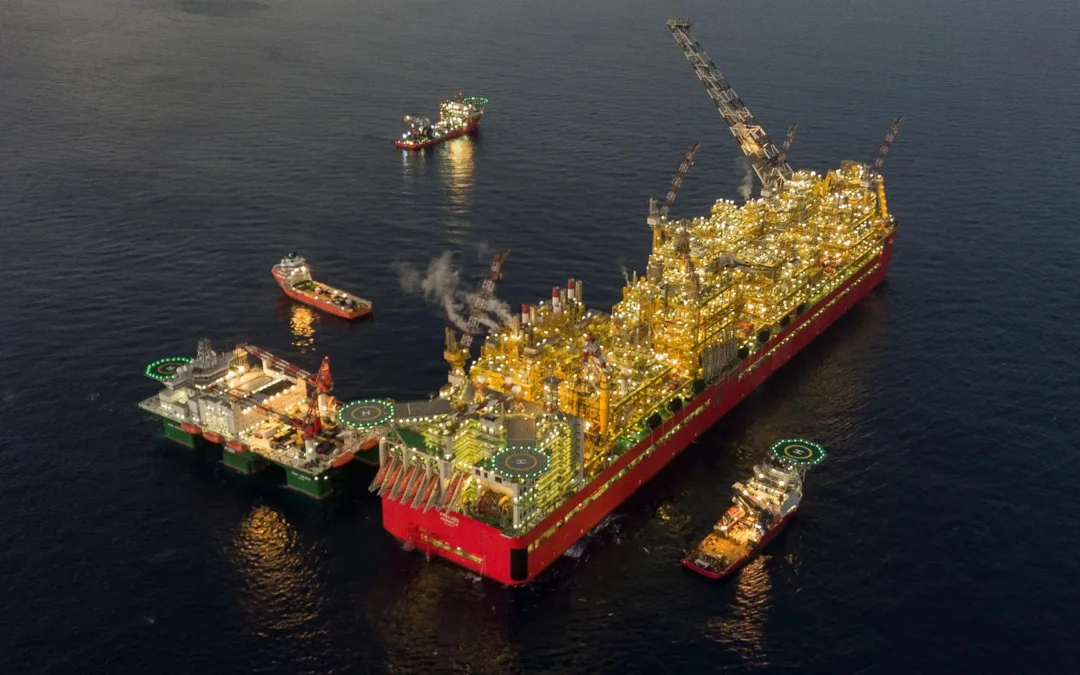
An existing production facility can become a development hub for resources beyond the field it was originally built to produce. FPSOs are particularly important because their processing, storage and export capabilities can support additional subsea production where sufficient capacity and compatibility exist.
Nigeria’s Bonga North provides a clear example. In December 2024, Shell took final investment decision on Bonga North as a subsea tieback to the existing Bonga FPSO. The project involves 16 wells, new subsea infrastructure and modifications to the existing FPSO. It is expected to recover more than 300 million barrels of oil equivalent and reach peak production of 110,000 barrels per day.
Rather than building an entirely new production system, Bonga North is being developed around infrastructure already in place.
The same principle can be seen in the UK North Sea, where Teal West achieved first oil in July 2026 as a subsea tieback to the Anasuria FPSO.
These projects show how established infrastructure can create additional development opportunities beyond the field for which it was originally built.
Existing Does Not Mean Available
The presence of an FPSO, platform or pipeline nearby does not automatically make a tieback viable. The host needs sufficient processing and export capacity, while the new development must be compatible with existing subsea systems, pressure and temperature conditions, flow-assurance requirements and injection systems. The remaining operating life of the host matters as well.
Distance can also add substantial complexity. A nearby field may still require significant subsea investment or present difficult flow-assurance conditions. Water depth, recoverable volumes, reservoir complexity and host limitations all influence the economics.
Timing matters too. Spare capacity today may not be available several years from now, while a host life extension or additional capacity could improve the economics of a future connection.
The central question is whether the infrastructure is nearby, compatible, available and economically capable of supporting another development.
The Complexity Moves Into Integration
Using existing infrastructure can reduce the amount of new infrastructure that has to be built, but it does not eliminate project complexity. The challenge shifts toward integrating a new development with an asset that may already be operating.
That can involve brownfield modifications, shutdown planning, equipment integration and offshore installation windows. Bonga North, for example, requires new risers, flowlines, umbilicals and associated subsea structures alongside modifications to the existing Bonga FPSO.
This creates two tests for a tieback: technical feasibility, whether the existing asset can accommodate the additional production, and execution feasibility, whether equipment, vessels, materials and personnel can be coordinated safely around an operating asset.
Procurement must align with engineering and installation schedules, while marine support and specialist personnel have to be available when offshore windows open.
This is where integrated procurement, project management, marine support, equipment and manpower services become part of the execution environment. Sealandair Group operates across these areas, supporting energy and marine operations.
A tieback can therefore reduce the infrastructure an operator needs to create while increasing the importance of coordinating what connects the new development to the existing system.
What Tiebacks Change About Offshore Development
Tiebacks are unlikely to replace standalone offshore developments. Large discoveries in remote locations may still require dedicated production systems, while some reservoirs will be too far from existing infrastructure or exceed available host capacity. In other cases, the limitations or remaining life of an existing facility may make a standalone development more suitable.
What is changing is the starting point of the development conversation. Operators can assess a resource alongside nearby infrastructure, considering host capacity, remaining life, export routes, connection costs and required modifications.
Existing facilities can therefore become part of the opportunity set for future resources. Where capacity, compatibility and economics align, a tieback can enable new production without rebuilding an entire offshore system around it.
So, are tiebacks becoming the new normal?
Not as a universal replacement for standalone development, but as a first option worth evaluating where suitable infrastructure exists.
The offshore development question is evolving from “What infrastructure do we need to build?” toward “What infrastructure can we use, and what will it take to integrate it?”
That shift could become an important feature of offshore development as operators look to extract more value from infrastructure already in the water.