
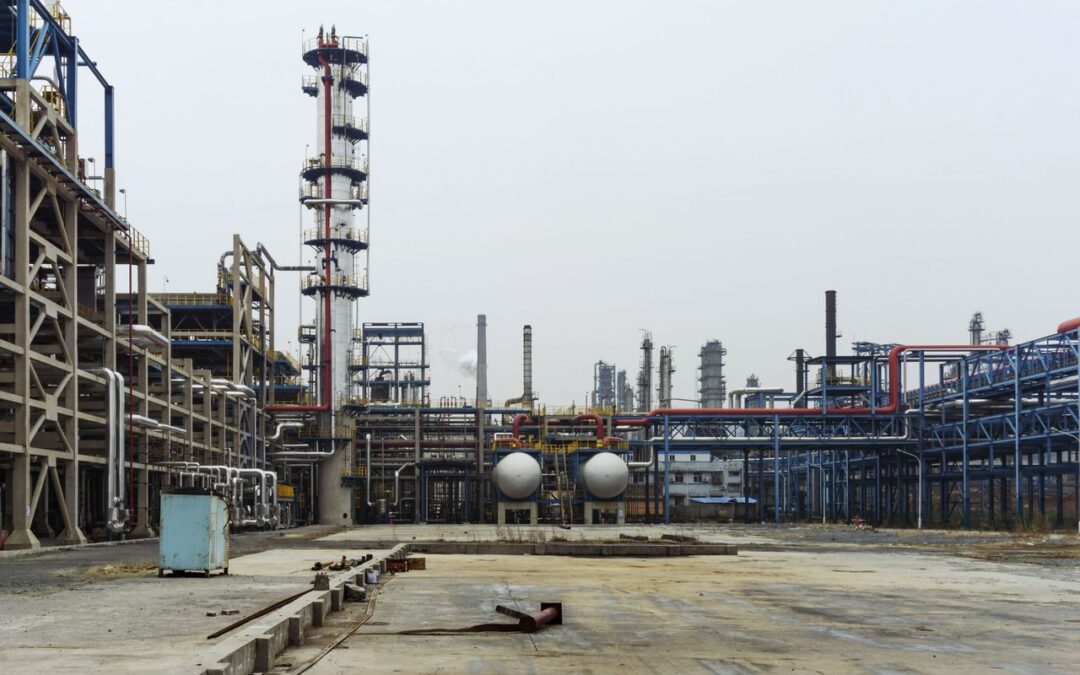
Africa’s refining industry faces challenges that extend beyond the availability of crude oil. Despite being a major petroleum-producing region, the continent has limited capacity to process crude into finished products at the scale required by its markets. Ageing facilities, operational disruptions, financing constraints and inadequate distribution infrastructure have contributed to continued dependence on imported petroleum products.
The challenge is not simply to build more refineries, but to create an industry where facilities can operate commercially, access reliable markets and distribute products efficiently.
Recent developments between Nigeria and Cameroon illustrate the potential of regional cooperation. Cameroon’s National Refining Company, SONARA, signed an agreement with Dangote Group and MRS Oil & Gas for the supply of refined petroleum products. The arrangement demonstrates how refining capacity in one country can support demand in another, particularly where domestic production has been disrupted.
Beyond immediate supply needs, it raises a broader question: can stronger connections between African petroleum markets create the conditions needed to sustain and expand refining capacity?
Regional Markets and Refinery Investment
For countries with limited domestic refining capacity, supply arrangements with neighbouring producers offer an additional route to securing petroleum products while diversifying supply sources.
Nigeria’s expanding refining capacity presents an opportunity in this regard. The Dangote refinery, with an original nameplate capacity of 650,000 barrels per day, adds significant processing infrastructure to Africa’s downstream petroleum industry and creates opportunities to serve markets beyond Nigeria.
However, the SONARA agreement is a refined-product supply arrangement, not a joint refinery investment or rehabilitation agreement. Its commercial terms, supply volumes and delivery schedule have not been publicly disclosed.
More broadly, access to neighbouring markets can expand a refinery’s customer base. Predictable demand and reliable offtake arrangements may improve the commercial case for operating or upgrading facilities, provided that production costs, feedstock availability, financing and infrastructure support sustainable operations.
From Imported Supply to Domestic Capacity
Cameroon’s experience illustrates the difference between securing refined products and restoring domestic refining capacity.
SONARA’s refinery in Limbe has remained out of operation since a fire in May 2019 damaged several production units. Cameroon is pursuing a separate recovery programme through PARRAS 24, a 24-month restructuring and rehabilitation initiative aimed at restoring the refinery’s operations.
In June 2026, the government conducted an international market consultation for the wider rehabilitation and modernisation project, engaging potential investors, financiers, engineering companies and technical partners. The consultation was intended to improve the project’s technical, financial and contractual structure. It was not a contract award or confirmation that reconstruction had begun.
Restoring a refinery requires more than replacing damaged equipment. It involves engineering assessments, financing, procurement, construction management, technical expertise and long-term maintenance planning.
The African Finance Corporation’s State of Africa’s Infrastructure Report 2025 estimates that approximately $16 billion in investment is required to upgrade existing African refineries, improve operational efficiency and meet cleaner fuel standards. This is an estimated investment requirement, not funding already committed.
Imported products can help meet immediate demand during domestic production disruptions, but they cannot replace the investment needed to restore local refining capacity.
The Infrastructure Behind Energy Markets
Refining capacity alone does not guarantee reliable product distribution. Storage, transportation and terminal infrastructure determine how effectively products reach their intended markets.
Coastal storage facilities allow products to be received and held before distribution, while ports and marine transportation connect refineries with receiving terminals across national boundaries. Further inland, pipelines and rail networks can move large volumes over longer distances where commercially viable. Depots and road transportation complete the distribution chain.
These systems must function together. Limited storage or transportation capacity can restrict a refinery’s market reach, while inadequate receiving infrastructure can create difficulties for importing countries.
Developing these networks requires investment beyond processing facilities. Procurement, project management, equipment sourcing, technical support, marine operations and skilled manpower all contribute to the effective operation of petroleum supply systems.
Building a Connected Refining Industry
Strengthening Africa’s refining industry will require progress in three areas: reliable commercial arrangements between producers and buyers, sustained investment in existing and new refining facilities, and supporting infrastructure that connects production centres with consumers.
These developments also create opportunities for specialised service providers across procurement, project management, technical support, marine operations, equipment sourcing and manpower deployment. Sealandair Group provides services that support the technical and operational requirements of energy and marine activities.
Ultimately, the future of Africa’s refining industry will depend not only on how much each country can produce, but also on how effectively its facilities connect with markets, transportation networks and supporting infrastructure.
Supply partnerships can improve access to available products, while refinery rehabilitation and new investment strengthen domestic production. Both are necessary to build an industry in which African countries can participate in wider petroleum markets while developing the capacity to meet more of their own energy needs.