
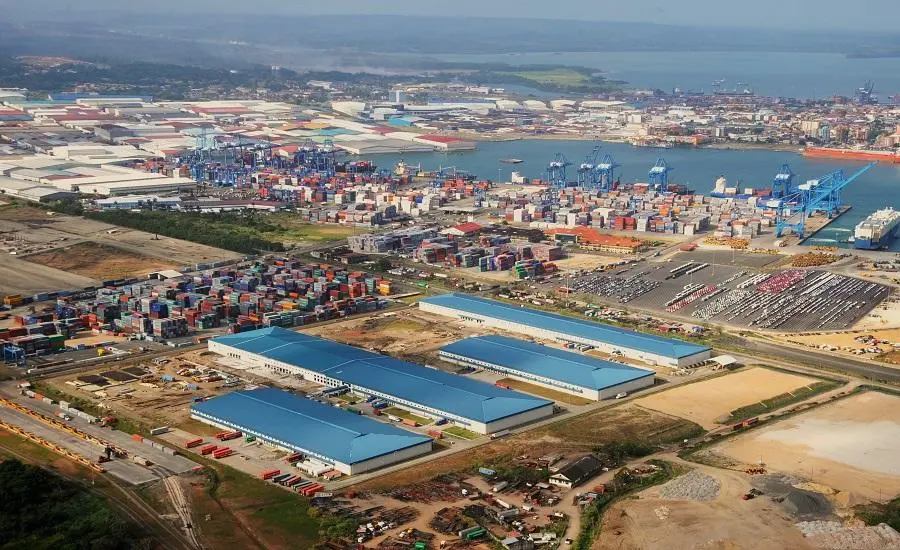
Africa’s logistics sector is becoming increasingly important to the continent’s economic growth.
As e-commerce expands, cities grow and intra-African trade develops, businesses need more than roads and ports. They need warehouses, distribution centres, fulfilment facilities and industrial logistics hubs that can move goods efficiently between producers, markets and consumers.
The opportunity is increasingly visible at the intersection of real estate and infrastructure.
In Nigeria, the e-commerce market is projected to grow from US$10.49 billion in 2026 to US$18.68 billion by 2031, according to Mordor Intelligence. At the same time, infrastructure such as the Lekki Deep Sea Port and Lagos Free Zone is strengthening the connection between maritime trade, industrial activity and distribution.
These developments point to a wider shift: logistics property is becoming part of the infrastructure required to support Africa’s economic growth.
The Demand for Modern Logistics Space
Many African markets still face a shortage of modern logistics infrastructure.
Warehouses vary significantly in quality, location and supporting infrastructure. Businesses increasingly require reliable power, efficient loading areas, adequate storage capacity and access to major transport routes.
Urbanisation adds another layer of demand. According to Africa’s Urbanisation Dynamics 2025, a joint report by the OECD/SWAC, African Development Bank, UCLG Africa and Cities Alliance, Africa’s urban population is projected to double from about 700 million to 1.4 billion by 2050.
As cities expand, distribution networks have to move goods closer to increasingly concentrated consumer markets.
This makes location particularly important. A warehouse near a major port, industrial corridor, highway or urban market can provide a very different commercial proposition from a similar facility located far from those networks.
E-Commerce and Trade Are Reshaping Logistics
E-commerce creates demand for a physical network behind the digital transaction.
Orders have to be stored, picked, packaged and transported, creating demand for fulfilment centres, regional distribution facilities and last-mile logistics hubs.
Regional trade is another driver.
The African Continental Free Trade Area is designed to reduce trade barriers and support greater movement of goods between African economies. As regional supply chains develop, businesses will need infrastructure capable of supporting cross-border distribution.
Ports such as Lekki can therefore serve as more than maritime gateways. Their development can support wider logistics ecosystems connecting imports, exports, industrial production and distribution.
What This Means for Investors
The investment case is closely linked to the relationship between supply and demand.
Knight Frank reported that average occupancy for modern warehouses across the African markets covered by its H1 2025 dashboard reached 83%, up from 75% in H1 2024. The increase reflects continued demand for modern logistics space, particularly Grade A warehousing.
Occupancy matters because it affects leasing performance and the income potential of an asset. But an 83% continental average does not mean every warehouse will perform equally.
Location, building quality, tenant profile, lease structure, operating costs and access to infrastructure can all influence returns.
Nigeria provides a useful example. Knight Frank reported prime warehousing rents of approximately US$5 per square metre per month in Lagos in H1 2024, highlighting the value attached to quality logistics space in one of Africa’s major commercial markets.
For investors, the opportunity is therefore not simply to acquire warehouse space. It is to identify locations where population growth, trade activity, industrial development and infrastructure investment can support sustained occupier demand.
Infrastructure Determines the Value
Developing logistics property requires more than land and construction.
Power, roads, water, telecommunications, security and transport connectivity can all influence how effectively a facility operates. Construction materials and specialised equipment must also be procured, transported and delivered according to the development schedule.
A strategically located warehouse can still underperform if the surrounding infrastructure cannot support its intended use.
This is where the distinction between real estate development and infrastructure development becomes less clear.
At Sealandair Global Investments, our focus extends across infrastructure-linked opportunities, including logistics and industrial development. Supporting these projects requires coordination between investment objectives, procurement, infrastructure requirements and project execution.
Where Real Estate Meets Trade
Africa’s logistics opportunity is ultimately tied to the movement of goods.
Ports create trade flows. Industrial zones create demand for storage and distribution. Growing cities create consumer markets. Roads, power and connectivity determine how efficiently those markets can be served.
As these systems develop, logistics real estate becomes part of the infrastructure supporting economic activity rather than simply another property category.
The value of logistics property increasingly lies in its position within the wider network of trade, infrastructure and economic activity.