
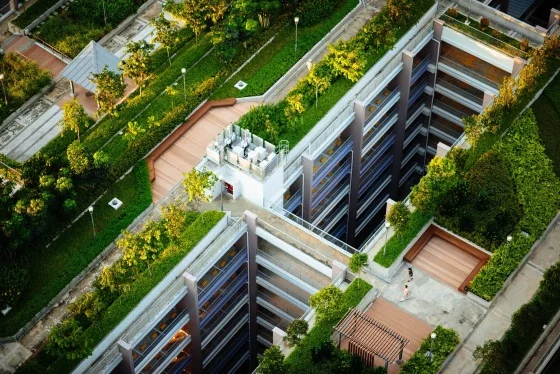
A green building certification can strengthen an investment case, but it does not automatically make a property more valuable.
For investors, the real value of certification lies in what it reveals about the asset: stronger energy performance, lower operating exposure, better building standards and greater readiness for changing market expectations.
The label is therefore best understood as an investment signal, not a guarantee of returns. Its relevance depends on whether the qualities it represents improve the property’s income, resilience and long-term market position.
Why Investors Pay Attention
The investment case often begins with operating performance.
Buildings that use energy and water more efficiently may reduce utility expenses, protect Net Operating Income and make long-term cash flow more predictable. Even where tenants pay most of these costs, lower total occupancy expenses can make the building more attractive to prospective tenants and support stronger tenant retention.
This is where efficiency begins to affect valuation.
Commercial properties are often valued according to the income they generate and the reliability of that income. If certification is supported by lower expenses, stable occupancy and resilient cash flow, it may contribute to a stronger valuation. If those performance improvements are absent, the certificate itself adds little.
Operating efficiency is only part of the picture. A property must also remain attractive to the people and organisations expected to occupy it.
Many large corporate occupiers now include sustainability objectives within their real estate strategies. Certified buildings can help them meet internal environmental targets and provide credible evidence of those commitments, making such properties more attractive in certain leasing markets.
The benefit may not always appear as a substantial rental premium. It may instead be reflected in stronger leasing interest, shorter vacancy periods, improved tenant retention and access to a wider pool of corporate occupiers.
As occupier expectations change, regulation is also beginning to shape the investment outlook.
Energy-performance standards, carbon-reporting rules and building-efficiency requirements are developing across several markets. Properties that already operate at a higher standard may require less future expenditure to remain compliant and competitive.
This can influence more than day-to-day performance. Lenders and future buyers may also consider environmental risk, energy use and expected upgrade costs when assessing a property.
A building that is better prepared for regulatory change may therefore face fewer future liabilities and remain more attractive during financing, refinancing or sale.
Why Certification Is Not Enough
These advantages can strengthen an asset, but they do not remove the need for disciplined investment analysis.
A certified property can still perform poorly if it is badly located, overpriced, unsuitable for local demand or weakened by ineffective management. A building may also receive certification based on its design but fail to achieve the expected performance once occupied.
For that reason, investors must examine the results behind the certificate.
Actual energy and water consumption, maintenance expenses, tenant demand, lease quality and future capital requirements provide a clearer picture of whether the building is performing as expected.
Operating efficiency also has its own costs. Advanced building systems may require specialist maintenance and higher replacement expenditure, which should be considered when assessing long-term investment performance.
An uncertified property can still deliver strong returns when it has reliable tenants, efficient operations, appropriate pricing and sound market fundamentals. It may also offer an opportunity for an investor to improve performance through targeted upgrades.
In some cases, acquiring an uncertified building at the right price and improving it may create more value than purchasing a certified property at a significant premium.
Certification should therefore form part of due diligence, not replace it.
What Ultimately Determines Value
Green building certifications are becoming useful indicators of asset quality, operational efficiency and long-term resilience.
They can help investors assess whether a property is positioned to control costs, attract suitable tenants, respond to regulation and remain competitive over time.
Their relevance, however, will differ across markets. Tenant priorities, energy costs, regulation, financing conditions and the availability of certified properties vary from one country to another.
This makes market context essential.
For real estate investors, certification is one factor within a broader assessment of location, demand, asset condition, income quality, pricing and management capability.
This perspective is particularly important when identifying and managing real estate opportunities across multiple continents, where the same certification may carry different commercial value in different markets.
This is the approach taken by Sealandair Global Investments. Certification forms part of a broader assessment that considers market fundamentals, income resilience, asset quality, pricing and long-term growth potential before investment decisions are made.
Certification may strengthen the investment case, but the asset’s fundamentals determine whether that potential becomes long-term value.