
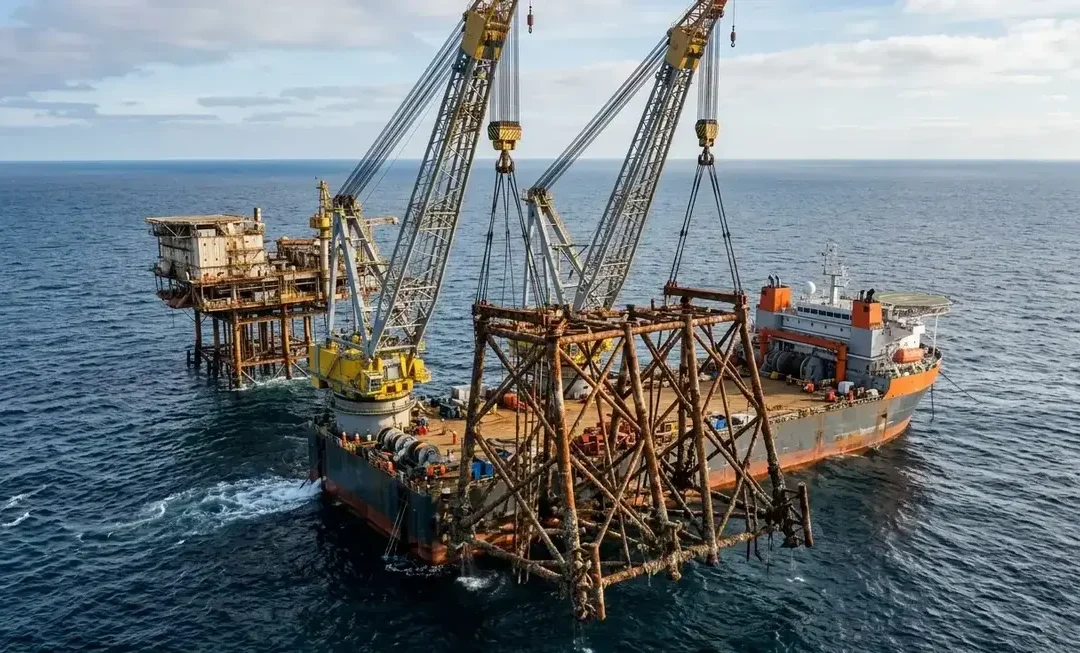
For decades, success in West Africa’s offshore energy sector has been measured by the fields discovered, the platforms installed, and the barrels produced. Increasingly, however, another phase of the asset lifecycle is becoming just as important: how those assets are responsibly retired.
Around the world, operators are preparing to decommission aging platforms, wells, pipelines, and subsea infrastructure built during earlier investment cycles. According to the International Association of Oil & Gas Producers (IOGP), citing Rystad Energy, offshore decommissioning expenditure is expected to exceed US$100 billion between 2025 and 2034. While much of this activity will occur in mature basins such as the North Sea and the Gulf of Mexico, its implications extend well beyond those regions.
West Africa is entering this transition as well. Mature offshore assets across Nigeria, Angola, Ghana, Equatorial Guinea, and the Republic of the Congo will increasingly require responsible retirement. Wood Mackenzie has highlighted Angola’s growing offshore decommissioning obligations as producing assets mature, reflecting a wider trend that will increasingly shape offshore operations across the region.
For West Africa, this is more than a compliance exercise. It marks a new phase in the offshore asset lifecycle, one that places greater emphasis on planning, coordination, and disciplined execution.
More Than Removing Offshore Infrastructure
Offshore decommissioning is often associated with the removal of platforms and subsea equipment. In reality, physical removal is only one stage of a much broader process.
Long before heavy-lift vessels arrive offshore, operators must complete engineering assessments, plug and abandon wells, secure regulatory approvals, conduct environmental studies, mobilise specialist resources, and coordinate multiple contractors. Decisions made during these stages often determine whether a project is delivered safely, on schedule, and within budget.
Consider a typical decommissioning programme. Plug-and-abandonment work finishes on schedule, but a specialist vessel becomes unavailable. The revised timeline pushes subsea recovery into a less favourable weather window. Support contracts are extended, offshore personnel remain mobilised longer than anticipated, and a scheduling issue quickly becomes a broader operational challenge that increases costs and reduces flexibility.
Successful decommissioning depends not only on technical expertise, but also on maintaining coordination as project conditions evolve.
Building the Capability to Deliver
The question is no longer whether decommissioning activity will grow. It is whether operators and regional service providers are prepared to deliver increasingly complex projects safely, efficiently, and with the operational capability they demand.
Building that capability extends beyond engineering. It requires integrated offshore support, dependable procurement, coordinated marine logistics, effective project management, environmental compliance, and experienced regional partners who understand local operating environments.
Strong regional capability also improves execution. Local supply chains can reduce mobilisation times, strengthen engagement with regulators, improve responsiveness, and retain technical knowledge within the region. At the same time, offshore decommissioning will continue to rely on specialist international expertise and advanced technologies.
The strongest model is not one that replaces global capability with local participation. It is one that combines international technical expertise with increasingly capable regional delivery. This approach strengthens operational resilience and supports reliable execution throughout the offshore asset lifecycle.
A Market That Rewards Preparation
Decommissioning requires significant planning, specialised resources, and close collaboration between multiple organisations. It also presents a difficult commercial reality. Retirement projects require substantial investment but generate no new production, making them easy to defer while operators prioritise revenue-generating activities. Delaying those decisions, however, can increase future liabilities, complicate execution, and expose projects to evolving regulatory expectations.
Preparation therefore becomes a strategic advantage.
For operators, integrating decommissioning into broader asset lifecycle planning improves schedule certainty and reduces execution risk.
For governments, clear regulatory frameworks and predictable approval processes support safe, efficient, and environmentally responsible project delivery.
For offshore service providers, success depends on developing the operational capability, technical expertise, and partnerships required to execute increasingly complex offshore programmes with confidence.
Looking Ahead
The offshore industry has traditionally measured success by the resources it discovers and the infrastructure it builds. Increasingly, it will also be judged by how responsibly those assets are retired.
At Sealandair Group, we believe successful offshore decommissioning is defined long before the first structure is removed. It is shaped by the quality of planning, the reliability of procurement, the coordination of marine logistics, and the discipline of project execution.
Responsible asset retirement is more than the final phase of an offshore project. It represents the next phase of offshore operational capability, where dependable execution, trusted partnerships, and lifecycle expertise become defining measures of success.