
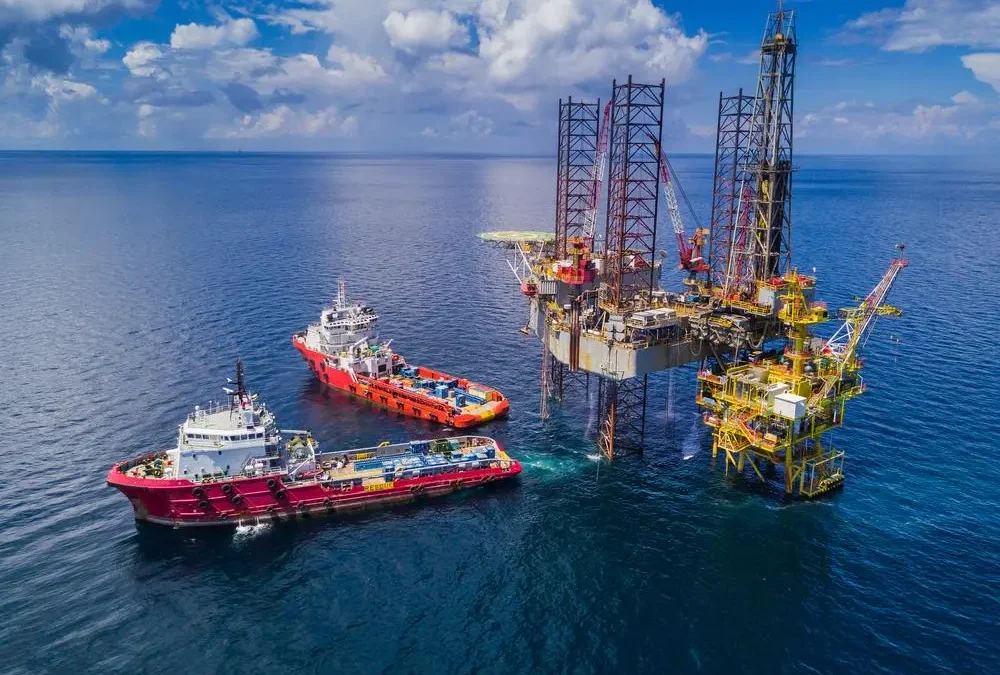
Offshore energy assets run on fuel.
Platforms, FPSOs, support vessels, crew boats, and supply ships all depend on a continuous and reliable fuel supply to keep operations moving. Disruption to that supply chain does not simply create inefficiency. It can slow operations, increase costs, and affect project timelines.
As the industry begins transitioning toward lower-emission fuels, a new challenge is emerging. The fuels that many offshore assets may eventually need do not yet exist at the scale, in the locations, or within the infrastructure networks required to support global offshore operations.
Offshore Has a Different Fuel Challenge
Much of the conversation around maritime decarbonisation focuses on commercial shipping.
Container vessels, tankers, and bulk carriers operate on established international routes that connect major ports where alternative fuel infrastructure is beginning to develop.
Offshore operations are different.
Support vessels and platform supply vessels typically operate from shore bases, often in remote regions where fuel infrastructure is already limited. These supply chains are more localised and often more dependent on regional logistics networks.
As lower-emission fuels become more widely adopted, the infrastructure gaps are likely to be felt most acutely in offshore operations, where access, storage, and distribution present additional challenges.
The Pressure Is Already Building
The transition is not being driven by fuel availability alone.
Regulatory frameworks are encouraging the maritime sector to reduce emissions, while energy companies are increasingly setting targets that extend across their supply chains and support operations.
As a result, offshore operators are beginning to ask more questions about emissions performance, fuel strategies, and long-term transition plans.
The expectation for change is growing.
The infrastructure needed to support that change, however, is still developing.
What This Means for Offshore Operators
The immediate challenge is not fuel scarcity. Conventional marine fuels remain widely available and will continue to support offshore operations for years to come.
The bigger issue is long-term readiness.
Many vessels entering service today are expected to operate for decades. Decisions made now about fuel systems, vessel capabilities, and supply arrangements will influence how easily operators can adapt to future regulatory and commercial requirements.
Without sufficient infrastructure at shore bases, ports, and bunkering locations, the transition to lower-emission fuels could become significantly more difficult and costly than anticipated.
Why Logistics Will Matter More Than Ever
Fuel supply has always been a logistics challenge.
Delivering the right fuel, in the right quantity, to the right vessel at the right time requires coordination across procurement, storage, transportation, and marine operations.
As fuel options become more diverse, that coordination challenge will only increase.
At Sealandair Integrated Solutions, we support offshore operations through vessel fueling, marine logistics, and operational support services designed to help clients maintain reliability in demanding environments. As the industry evolves, visibility, flexibility, and effective supply chain coordination will become increasingly important.
The Transition Will Depend on Infrastructure
The offshore fuel transition will not be defined solely by technology or regulation. It will also depend on the practical ability to supply the right fuels where they are needed.
For operators, vessel owners, and logistics providers, that means planning today for a fuel landscape that is still taking shape.
The organisations that understand this challenge early, and begin preparing for it now, will be better positioned to adapt as offshore energy continues to evolve.