
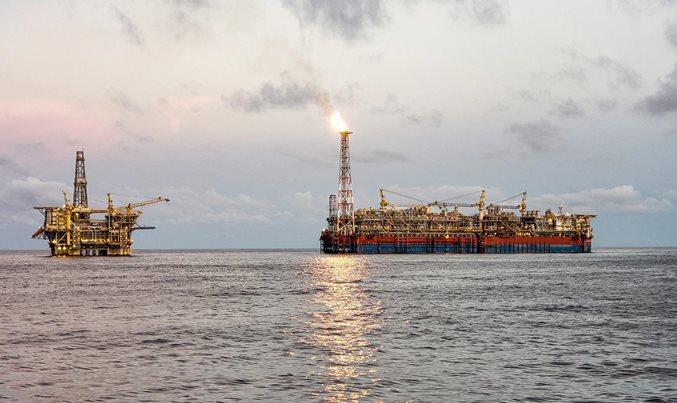
The global shift toward cleaner energy is real. Investment in renewables is at record levels, emissions reduction targets are embedded in national policy frameworks across most of the world, and the direction of travel is not seriously in dispute. What is in dispute, and what the headlines rarely capture; is the speed, shape, and sequencing of that transition, which looks fundamentally different depending on where you are standing. For operators, investors, and service providers in the global energy sector, understanding those differences is not just useful. It is essential.
Why the Transition Looks Different Across Regions
The energy transition is not a single global programme with a shared timeline. It is a collection of national and regional decisions, each shaped by a different combination of economic circumstance, infrastructure inheritance, energy security priorities, and political consensus. Three factors in particular determine how fast any country or region can move.
1. Energy Access and Affordability
In economies where reliable electricity is already universal, the transition debate is largely about decarbonising an existing system. In economies where hundreds of millions of people still lack basic energy access, the conversation is fundamentally different. The priority is not replacement; it is addition. Building clean energy infrastructure and expanding total energy supply at the same time is a far more complex and capital-intensive challenge than simply switching fuel sources.
2. Energy Security
The events of the past few years have reminded even the most transition-committed economies that energy security cannot be sacrificed on the altar of decarbonisation. Europe’s experience following the Russia-Ukraine conflict, which drove a quiet rehabilitation of gas as a bridge fuel; illustrated that affordability and security concerns can slow the pace of transition regardless of political intent. Countries that depend heavily on imported energy are making different calculations than those sitting on large domestic reserves.
3. Industrial Development Stage
Economies that industrialised on fossil fuels over the past two centuries are in a fundamentally different position from those whose industrial development is still underway. Asking a country to skip the energy infrastructure that powered growth elsewhere, without providing equivalent alternatives at equivalent cost; is a request that most developing economies are declining to accept.
How Different Regions Are Responding
1. Europe: Fastest Transition, Highest Ambition
Europe remains the most aggressive in pursuing decarbonisation, with binding emissions targets, carbon pricing mechanisms, and substantial public and private investment in renewables. Yet even here, the transition has been complicated by energy security concerns and cost pressures. Gas has re-entered the mainstream conversation as a necessary bridge, and several European governments have extended the operational lives of assets they had previously planned to retire.
2. The United States: Expanding Both Sides Simultaneously
The United States presents perhaps the most paradoxical picture. It is simultaneously one of the world’s largest investors in clean energy, driven by the Inflation Reduction Act, and one of the world’s largest producers of oil and gas, with production at or near record levels. The American approach is not transition so much as expansion: adding clean energy capacity while maintaining and growing conventional production. The result is a growing total energy supply rather than a rebalancing of an existing one.
3. China: Leading in Clean Energy, Dependent on Coal
China leads the world in solar panel production, wind installation, and electric vehicle deployment. It also consumes more coal than the rest of the world combined. The transition is underway, but it is being sequenced around China’s industrial development priorities and energy security requirements. The pace is determined in Beijing, not in Paris or Glasgow.
4. Africa: Energy Expansion, Not Energy Replacement
Africa’s position in the global transition debate is the most instructive — and the most misunderstood. The continent that contributed least to historical carbon emissions faces the greatest external pressure to decarbonise its energy development. Yet with over 600 million people still lacking reliable electricity access, and with a population expected to double by 2050, the imperative is energy access first.
African governments are not rejecting the energy transition. They are insisting on pursuing it on their own terms — expanding total energy capacity through a mix of gas, renewables, and in some cases conventional oil, rather than constraining development in the name of targets set by economies that industrialised without such constraints. Gas, in particular, is widely recognised across the continent as both an economic necessity and a cleaner alternative to the coal and diesel generation that currently fills the gap.
What This Means for the Energy Sector
The uneven pace of the global energy transition has a direct implication for where energy investment, services demand, and infrastructure development will be most active over the coming decade. Regions expanding their total energy mix, rather than simply replacing one fuel with another; will generate sustained, growing demand for upstream development, gas infrastructure, power generation projects, and the full range of services that support them.
West Africa, and Nigeria in particular, sits at the centre of this opportunity. As a region with significant proven reserves, a Gas-First policy, advancing pipeline infrastructure, and a population-driven demand growth story, it represents one of the most durable long-term energy development environments in the world.
Conclusion
The energy transition is not a single event with a single timeline. It is a global process unfolding at different speeds, in different shapes, and with different priorities across every region of the world. For the energy sector, that complexity is not a problem to be solved; it is a landscape to be navigated.
Sealandair Energy’s procurement, project management, and technical support services are built for exactly this environment; supporting operators across Nigeria and Africa as they develop the energy infrastructure that the continent’s growth demands, on Africa’s own terms.